
Endosteal Dental Implants in New York, NY
Restoring Your Smile with Endosteal Implants in Manhattan
Endosteal dental implants are the most widely used type of dental implant: small titanium posts placed directly into the jawbone to serve as artificial tooth roots for crowns, bridges, and dentures. Whether you are missing one tooth or a full arch, an endosteal implant is the closest thing dentistry offers to getting your natural tooth back. It is fixed in place, strong enough for an apple (or a New York bagel), and built to last for decades with good care.
At Advanced Implant & Cosmetic Dentistry in the Flatiron District, Dr. Robert G. Castracane, DMD, an ABOI/ID Diplomate and Honored Fellow of the American Academy of Implant Dentistry, places endosteal implants for patients across Manhattan and the greater New York area. If you have been searching for an implant dentist near you who will explain your options plainly, this guide covers all of it: what endosteal implants are, the types, how they compare with subperiosteal and mini dental implants, the step-by-step dental implants procedure, realistic New York dental implants cost ranges, and answers to the questions NYC patients ask most.
Ready to talk? Call (646) 371-9095 to schedule a consultation.
Endosteal Implants at a Glance
| Where it sits | Inside the jawbone (“endosteal” means within the bone) |
| Made of | Titanium or titanium alloy; zirconia (ceramic) in select cases |
| Can replace | One tooth, several teeth, or a full arch |
| Healing before the final restoration | Typically about 3–6 months; longer if a bone graft is needed |
| 10-year survival | Around 96% in a 2019 meta-analysis of modern implant systems |
| Typical NYC cost for one tooth (implant, abutment, crown) | Commonly quoted between about $3,500 and $7,500, depending on grafting, materials, and provider |
| Best for | Adults with enough jawbone (or bone that can be rebuilt) and healthy gums |
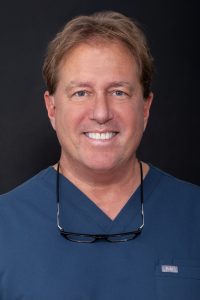
Meet Your New York Implant Dentist
Robert G. Castracane, DMD, ABOI/ID Diplomate
Choosing the right dentist matters as much as choosing the right implant. Dr. Castracane focuses on implant dentistry, prosthodontics, and advanced dental surgery, and his training includes:
- Diplomate, American Board of Oral Implantology / Implant Dentistry (ABOI/ID)
- Diplomate, International Congress of Oral Implantologists (ICOI)
- Honored Fellow, American Academy of Implant Dentistry (AAID)
- Board of Trustees, AAID, 2019–2023
- Graduate, Misch International Implant Institute
- DMD, Tufts University School of Dental Medicine
- Residency, Kings County Medical Center (Brooklyn)
- Former Associate Professor at NYU College of Dentistry and Seton Hall University School of Graduate Medical Education
His background in implant and cosmetic dentistry allows treatment planning to consider both the function of the implant and the appearance of the final restoration.
What Are Endosteal Dental Implants?
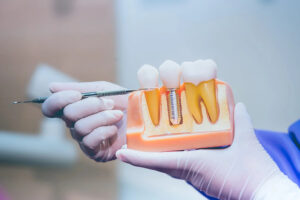
The word endosteal comes from Greek roots meaning “within the bone,” and that’s the whole idea. During implant surgery, a small screw-shaped post is placed into the lower jaw (mandible) or upper jaw (maxilla). Over the following weeks and months, the bone grows tightly against the titanium surface in a process called osseointegration. Swedish researcher Per-Ingvar Brånemark first documented this bond in the 1950s, and it’s the reason modern implants feel so stable.
A complete endosteal implant has three parts:
- The Implant Post (fixture): The artificial tooth root that sits in the bone.
- The Abutment: A small connector that attaches to the post and rises through the gum.
- The Restoration: A custom crown, bridge, or prosthesis that you see and chew with, shaped and shaded to match your natural teeth.
That last part is where our cosmetic dentistry background matters. A well-placed implant post is only half the result; the crown has to look like it belongs in your smile.
Endosteal implants can support:
- A single crown; see single-tooth dental implants
- Several teeth in a row with an implant-supported bridge
- A full arch with All-on-X dental implants
- A more stable denture with implant-supported dentures
Most traditional dental implants placed today are endosteal, so when a dentist says “dental implants” without qualification, this is usually the type they mean.
Types of Endosteal Implants
Endosteal implants come in different sizes and materials, but traditional screw-shaped titanium implants are the most common. Your dentist selects the implant based on your available bone, the location of the missing tooth, your bite, and your treatment goals.
- Titanium Implants: The most widely used option, with decades of clinical research supporting their durability and biocompatibility.
- Zirconia Implants: A tooth-colored, metal-free alternative that may be appropriate for some patients. Long-term research is more limited than it is for titanium.
- Narrow-diameter Implants: Smaller implants may be useful where available bone or the space between teeth is limited.
- Mini Dental Implants: Generally less than 3 mm wide and used selectively, including for certain denture-stabilization cases. Our practice does not provide mini implants.
Most patients receiving traditional dental implants will receive a screw-shaped titanium implant. Dr. Castracane determines the appropriate size and material based on your anatomy and treatment plan.
Endosteal vs. Subperiosteal vs. Zygomatic Implants
Endosteal implants are one of several implant approaches. The main difference is where the implant is anchored:
- Endosteal Implants: Placed directly into the jawbone. They are the standard type used for most modern dental implant treatment and rely on osseointegration for stability.
- Subperiosteal Implants: Positioned above the jawbone but underneath the gum tissue. They are used much less frequently and may be considered in specific cases of severe bone loss.
- Zygomatic Implants: Anchored in the cheekbone rather than the upper jaw. They are generally reserved for patients with significant upper-jaw bone loss.
For most patients who have enough healthy jawbone, endosteal implants are the conventional approach because the implant bonds directly with the bone. If bone loss makes standard placement difficult, bone grafting or another implant approach may be considered after 3D imaging and a detailed evaluation.
Why Are Endosteal Implants the Preferred Tooth Replacement Option?
Endosteal implants offer several advantages compared with traditional bridges and removable dentures:
- Fixed Stability: An implant is anchored in the jawbone, so it does not move or come out during normal eating and speaking.
- Jawbone Preservation: An implant transfers chewing forces into the jaw and can help reduce the bone loss that occurs after a tooth is removed.
- Protection of Adjacent Teeth: A single implant can replace a missing tooth without grinding down the healthy teeth next to it, as is typically required for a traditional bridge.
- Natural Appearance: A custom crown, bridge, or full-arch restoration can be designed to match the surrounding teeth and gums.
- Long-term Durability: Modern implants have high long-term survival rates, although the crown or prosthesis attached to an implant may eventually require repair or replacement.
Implants still require regular brushing, interdental cleaning, professional maintenance, and attention to gum health. They are a long-term tooth replacement solution, not a maintenance-free one.
Are You a Candidate for Endosteal Dental Implants?
Most healthy adults can be considered for endosteal implants, and treatment is planned around your individual mouth. During your consultation, Dr. Castracane evaluates:
- Missing or failing teeth. Tooth loss from decay, gum disease, injury, or trauma can all be addressed, whether you need one implant or several.
- Jawbone volume and density. Enough bone is needed to hold the post. If bone has shrunk, a bone graft or sinus lift can often rebuild it (see below).
- Gum health. Active gum disease must be treated first, because it raises the risk of implant complications. Many patients qualify after periodontal therapy.
- Overall health. Well-controlled conditions such as diabetes do not automatically rule out implants, but they affect healing and long-term risk. Smoking is a significant risk factor for implant complications, and certain medications, such as bisphosphonates and other bone-affecting drugs, or prior radiation to the jaw, call for coordination with your physician.
- Age. There is no upper age limit for healthy adults. Implants are generally placed once jaw growth is complete.
- Commitment to hygiene and follow-up. Daily home care and regular professional visits are what keep implants healthy.
If you were previously told you are not a candidate, it is worth a second look. Advances in grafting, 3D planning, and implant design have expanded who qualifies. Learn more on our dental implant candidacy page, or call (646) 371-9095.
Bone Grafting and Sinus Lifts: Building a Foundation for Your Implant
Loss of jawbone does not necessarily mean you cannot receive an endosteal implant. Depending on where and how much bone has been lost, a grafting procedure can rebuild the foundation needed for implant placement.
Common procedures include:
- Socket Preservation: Graft material is placed after an extraction to help maintain the shape and volume of the bone.
- Ridge Augmentation: Bone is added to a jaw ridge that has become too thin or short for an implant.
- Sinus Lift: Bone is added beneath the sinus in the upper back jaw when there is not enough vertical bone for implant placement.
Grafting may be completed before implant surgery or, in selected cases, during the same treatment phase. Because grafting requires additional healing, it can increase the overall treatment time and cost. Your 3D scan helps determine whether additional bone is needed and which approach is appropriate.
The Endosteal Dental Implant Process, Step by Step
The complete implant process commonly takes several months because the jawbone needs time to heal around the implant. Your exact timeline depends on whether you need an extraction, bone graft, sinus lift, or other preparatory treatment.
- Consultation and 3D planning. We review your medical and dental history and use 3D imaging to evaluate your bone, nerves, sinuses, and bite. This information is used to develop your treatment plan and estimate your timeline and cost.
- Preparation, if needed. A damaged tooth may need to be removed before implant placement. Some patients also need bone grafting or a sinus lift to create adequate support.
- Implant surgery. The implant post is placed into the jawbone using local anesthesia. Sedation, including IV sedation, is available for patients who are anxious or undergoing more involved treatment. Most patients experience pressure rather than pain during the procedure.
- Healing and osseointegration. The bone gradually bonds with the implant, typically over about three to six months. Some qualifying patients can receive a temporary tooth on the day of implant surgery through an immediate-load approach.
- Abutment and restoration. Once the implant has integrated, the abutment is connected, and digital scans or impressions are taken for your final crown, bridge, or prosthesis.
- Final placement and follow-up. Your restoration is secured and checked for appearance, comfort, and bite. Regular examinations and professional cleanings help protect the implant and surrounding tissues over the long term.
For a more detailed walkthrough, visit our dental implant process page.
How Much Do Endosteal Dental Implants Cost in New York, NY?
The cost of an endosteal implant depends on the number of teeth being replaced and the procedures required to complete treatment.
Published 2026 price surveys for New York City commonly place a single dental implant, including the implant post, abutment, and crown, at approximately $3,500 to $7,500. Manhattan practices may fall toward the higher end of that range because of local operating costs.
Your total may be higher if you need:
- Bone grafting or a sinus lift
- Tooth extraction
- Multiple implants
- A full-arch restoration
- Specialized implant or crown materials
- Sedation or additional surgical treatment
When comparing prices, ask whether the estimate includes the implant post, abutment, crown or prosthesis, 3D imaging, extractions, grafting, and sedation. A lower advertised price may cover only part of the treatment.
Does Insurance Help Pay for Implants?
Dental insurance coverage varies significantly. Some plans cover portions of implant treatment or related procedures such as an extraction or crown, while others exclude implants. Our team can review your benefits and assist with pre-authorization when appropriate.
HSA and FSA funds can typically be used toward eligible dental treatment. Financing and payment options may also be available.
The most accurate way to determine your implant cost is through an examination and personalized treatment plan with an itemized estimate.
Risks, Success Rates, and Long-Term Care
Endosteal implants are among the most predictable procedures in dentistry, and we believe you should know the fine print.
Success rates. A 2019 systematic review of modern implant systems reported about 96% survival at 10 years, with individual studies ranging more widely. Data beyond 10 years is more limited and varies by study, which is one reason we treat implants as a long-term partnership rather than a one-time procedure.
The Complication to Know About: Peri-Implantitis
Implants cannot get cavities, but the gum and bone around them can become inflamed. A large 2025 review from the American Academy of Periodontology and the European Federation of Periodontology found that peri-implantitis affected roughly one in five patients, and the milder peri-implant mucositis affected nearly half. Gum disease history, smoking, and diabetes were among the identified risk indicators. The good news is that early inflammation is manageable, and regular maintenance visits are how it gets caught.
Other possible risks include infection, an implant that fails to integrate, nerve or sinus complications, and a loosened screw or chipped crown over time. Careful 3D planning, a healthy surgical environment, and good post-operative care lower these risks.
Caring for Your Implants:
- Brush twice a day with a soft brush and non-abrasive toothpaste
- Clean between teeth daily with implant-safe interdental brushes or floss, and consider a water flosser
- Use an antimicrobial rinse if recommended
- Keep professional cleanings and exams on schedule
- Wear a night guard if you grind your teeth
- Avoid smoking, which raises the risk of implant complications
Proper care protects both your investment and your smile.
Your Implant Dentist in Flatiron and Across New York
Our office at 37 West 20th Street, Suite 403, New York, NY 10011, is a central dentist in Flatiron, within walking distance of the PATH train and several subway lines. If you are looking for a dentist near you in Manhattan, we welcome patients from:
- Flatiron, Chelsea, Gramercy Park, and Union Square
- Greenwich Village, the West Village, and the East Village
- Midtown and Murray Hill
- Lower Manhattan
- The Upper East Side and Upper West Side
- Brooklyn, Queens, and nearby New Jersey communities such as Hoboken and Jersey City
Implant care is concentrated in a handful of key visits rather than daily appointments, so patients regularly plan their treatment around busy schedules and travel across the city.