All-on-X Dental Implants in New York, NY
A Fixed, Full-Arch Smile in the Heart of Flatiron
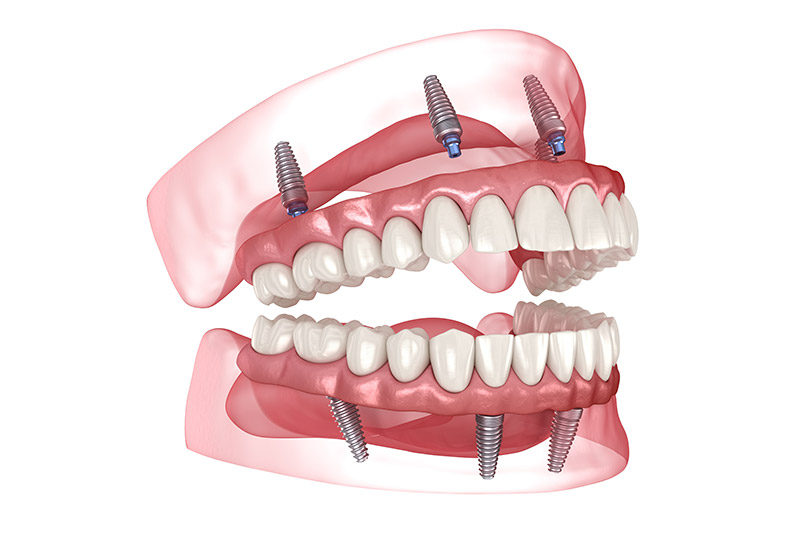
If you’re missing most or all of your teeth—or you’re tired of a denture that clicks, shifts, or needs paste to stay put—all-on-X dental implants offer a permanent alternative that’s changed how full-arch tooth replacement works. Instead of an individual implant for every missing tooth, this treatment anchors an entire arch of fixed, natural-looking teeth onto just four to six strategically placed implants.
At Advanced Implant & Cosmetic Dentistry, our implant dentist in New York, Dr. Robert G. Castracane, DMD, treats patients from across Manhattan, such as Flatiron, Midtown, Chelsea, Gramercy Park, Union Square, as well as Brooklyn, Queens, and beyond, who are searching for an experienced implant dentist near them. Many patients leave our Flatiron District office with a functional temporary smile the same day as surgery.
Call (646) 371-9095 to schedule a consultation.
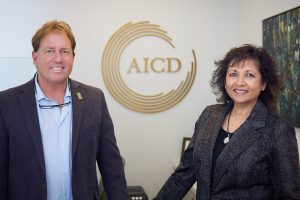
Why NYC Patients Choose Dr. Robert G. Castracane
Choosing who performs full-arch implant surgery matters as much as choosing the technique. Dr. Castracane is a board-certified implant dentist and surgeon whose background includes:
- A DMD from Tufts University School of Dental Medicine
- Residency training at Kings County Medical Center
- A faculty role as an associate professor at NYU College of Dentistry
- Advanced training through the Misch International Implant Institute
- Diplomate status with the American Board of Oral Implantology/Implant Dentistry (ABOI/ID)—a distinction held by roughly 600 dentists worldwide
Our dental practice in Flatiron focuses exclusively on implant and cosmetic dentistry, which means every part of your treatment, from the surgery to the final prosthesis, happens under one experienced team rather than being split across a general dental clinic and an outside specialist.
What’s the Difference Between All-on-4 and All-on-X?
The terms get used almost interchangeably, but they’re not quite the same thing, and understanding the distinction helps you know what to expect from treatment.
- All-on-4 is the original protocol: exactly four titanium implants per arch, with the back two angled to reach denser bone and avoid the need for grafting. It’s a proven, streamlined approach that works well for patients with reasonably healthy jawbone volume.
- All-on-X is the more flexible evolution of the same idea—the “X” stands for however many implants your anatomy actually calls for, typically four to six. If you’ve experienced more significant bone loss or your dentist wants extra support for a stronger bite, All-on-X allows the treatment plan to adapt to your jaw rather than forcing your jaw to fit a fixed number.
Both techniques replace an entire arch with a single fixed prosthesis. Both rely on osseointegration—the process by which titanium implants fuse directly with the jawbone, creating a foundation as stable as a natural tooth root. The right choice between them comes down to your bone density, health history, and goals, which Dr. Castracane evaluates using a CBCT scan (a 3D cone-beam CT scan that maps your jawbone in detail before any surgery is planned).
Why Full-Arch Implants Beat Removable Dentures
Conventional dentures have helped generations of patients, but they come with real trade-offs: they can slip while eating or speaking, need adhesive, and don’t stop the jawbone from shrinking over time. Traditional implants—one per missing tooth—solve the stability problem but can mean six to ten separate implants and extensive bone grafting for a full arch, which adds time, cost, and healing.
All-on-4 and All-on-X sit between those two options, offering:
- A fixed restoration that doesn’t move. No adhesive, no slipping, no taking it out at night.
- Fewer implants than traditional full-arch restoration, which often means a shorter, less invasive surgery.
- Jawbone preservation. Like any dental implant, they stimulate the bone the way a natural tooth root does, which helps prevent the bone loss that removable dentures can’t stop.
- A same-day option. Many patients qualify for immediate-load treatment, meaning a temporary fixed arch goes in right after surgery rather than after months of healing.
Are You a Candidate? What We Look For
You may be a good fit for All-on-X treatment if you:
- Are missing most or all of the teeth in an upper or lower arch
- Wear dentures that no longer fit well or feel secure
- Have some jawbone loss but still want a fixed, implant-supported option
- Want to avoid the extended treatment timeline that traditional implants and grafting can require
Patients who were previously told they weren’t candidates for implants, often because of bone loss, are sometimes surprised to learn All-on-X can still work for them. Because implant placement is planned around your densest available bone using CBCT imaging, this approach can succeed in situations where traditional implants can’t. A consultation with Dr. Castracane, reviewing your CBCT scan and health history, is the only reliable way to know which protocol and how many implants fit your jaw.

The All-on-X Implant Treatment Process
Full-arch implant surgery understandably raises a lot of questions—patients want to know what an actual appointment looks like, not just a one-line summary. Here’s what each stage really involves.
Your first visit is entirely diagnostic—no surgery happens yet. Dr. Castracane reviews your dental and medical history, examines your gums and remaining teeth, and takes a CBCT scan: a 3D cone-beam CT scan that captures your jawbone’s density, volume, and shape in far more detail than a standard dental X-ray. This scan is what actually determines whether All-on-4 or All-on-X fits your anatomy, and it identifies the exact spots in your jawbone with enough density to anchor an implant securely, avoiding the sinus cavities and nerve pathways that a flat X-ray can’t show. You’ll also discuss whether any teeth need extraction first and whether you’re a candidate for same-day temporary teeth.
Using the CBCT data, Dr. Castracane and the dental lab map out the exact number, position, and angle of your implants before you’re ever in the surgical chair. For All-on-X, the number and placement flex based on where your strongest bone actually is. This digital plan also determines the design of your temporary prosthesis, so it’s ready to attach the same day as surgery if you qualify.
If you still have failing or damaged teeth in the arch being treated, those are removed at the start of the surgical appointment—often in the same visit as implant placement, so you’re not making a separate trip to have teeth pulled and then coming back weeks later for implants.
Before implant placement begins, you’ll receive local anesthesia to numb the surgical area. Patients who feel anxious about dental surgery, need more extensive work done, or simply prefer to be unaware of the procedure can opt for IV sedation dentistry, administered by a qualified professional. Most patients describe the experience as passing quickly, with little to no memory of the surgical portion itself.
Titanium implants, the same biocompatible material used in traditional single-tooth implants, are placed into the jawbone at the precise angles mapped out during planning. The number placed depends on your bone volume and bite-force needs. Because the plan is built around your densest bone, many patients avoid the bone grafting or sinus lift procedures that traditional full-arch implants often require, which shortens the overall timeline meaningfully.
If your bone quality and implant stability meet the threshold for immediate loading, a fixed, functional temporary arch is attached to your implants before you leave the office. This isn’t a removable denture—it stays in place, lets you eat a modified diet, and lets you speak and smile normally while your mouth heals. Not every patient qualifies for same-day teeth; if your implants need more time to stabilize before bearing a full prosthesis, you may wear a different temporary solution during healing, which Dr. Castracane will discuss with you in advance so there are no surprises on surgery day.
Over the following three to six months, the titanium implants fuse directly with your jawbone through osseointegration—the biological process that gives implants their long-term stability, essentially replacing the root structure that a natural tooth once had. You’ll have follow-up visits during this period so Dr. Castracane can check healing progress, gum health, and how your temporary prosthesis is fitting. Most patients return to normal eating and speaking well before healing is fully complete, though harder foods are typically restricted until the implants are confirmed stable.
Once osseointegration is confirmed, impressions and digital scans are taken to design your permanent prosthesis. This final arch is custom-fabricated by the dental lab for fit, bite alignment, and a natural appearance—matched to your facial structure rather than a generic template. The temporary teeth are removed, and the permanent, long-term restoration is secured in its place, typically requiring one or two fitting appointments to confirm the bite feels right before it’s finalized.
After your final restoration is placed, you’ll return for periodic checkups so Dr. Castracane can monitor the implants and surrounding tissue — similar to how any dental implant is maintained long-term, but with particular attention to how the full-arch prosthesis is wearing and whether any adjustments are needed.
Caring for Your New Smile
All-on-X restorations are built to last, but they still need routine care: brushing twice daily, cleaning under the prosthesis with implant-safe floss or a water flosser, and keeping up with regular cleanings and exams so we can check the health of the implants and surrounding gum tissue. Avoiding smoking and habits like chewing ice will meaningfully extend the life of your restoration.
An Implant Dentist Near You in Manhattan
If you’ve searched for an “All-on-X dentist near me” or a “dentist in Flatiron” who handles full-arch implants start to finish, our office at 37 West 20th St. is built for exactly that. We regularly treat patients from:
- Flatiron and the Flatiron District
- Midtown and Midtown South
- Chelsea and Union Square
- Gramercy Park and Murray Hill
- Brooklyn, Queens, the Bronx, and Staten Island
Wherever you’re coming from in NYC, the consultation and CBCT scan happen in a single Flatiron visit, so you’re not shuttling between offices to get a full treatment plan.
What Does All-on-X Cost in New York?
The cost of All-on-X depends on how many implants your treatment plan needs, the materials used for your final prosthesis, and whether sedation or any additional procedures are involved. Because every treatment plan is different, Dr. Castracane provides detailed, itemized pricing during your consultation rather than a one-size-fits-all number. Financing options are available, and our team can help you understand what your dental insurance may cover.
Call (646) 371-9095 to get a personalized quote.